Chronicling the lives of influential and often forgotten figures.
A Very Thankful Husband
Dear History Lover,
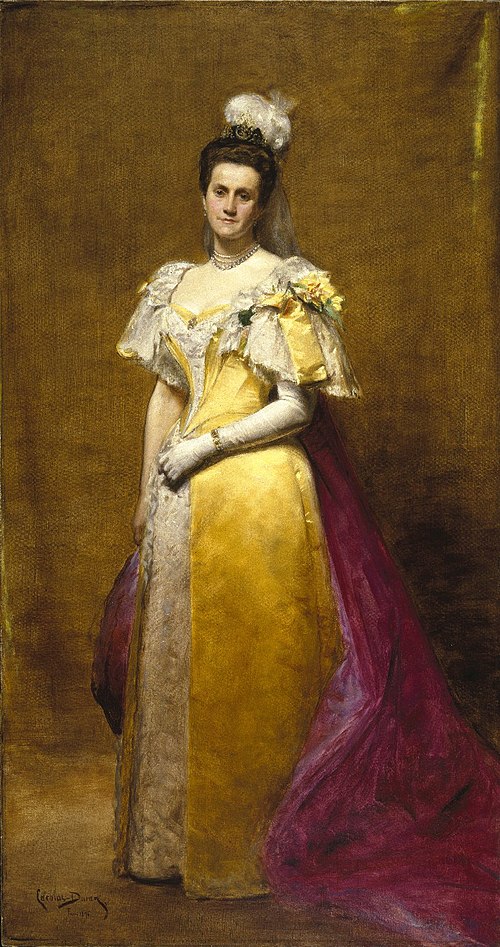
'Tis the season for family, gratitude, and warm tidings! In the spirit of giving thanks, we share the story of Emily Warren Roebling.
Some of you may be familiar with the name; her status as a Gilded Age socialite carries a hallmark legend of historic parties. She once threw a dual wedding celebration for herself and a sibling. Others
knew her for her feminist endeavors— encouraging women to pursue a degree in law, as she had done. In this edition of the HAPPI newsletter, we give Emily the thanks she is due for her accidental career as chief engineer of the Brooklyn Bridge.
Some newlyweds on honeymoon visit a resort in a
warm, tropical climate. Others venture to faraway lands. Emily Warren Roebling and her husband Washington Roebling hopped the pond to visit a bridge, and not a pretty one at that.
Chelsea Bridge, initially the ‘Victoria Bridge,’ was so wildly unpopular; even Queen Victoria’s House of Hanover disliked the inherent association. Steep tolls were charged to recoup the debt incurred in the making of the bridge (much to the dismay of locals), tarnishing its reputation to such an extent that the Houses of Parliament were forced to demand that Sabbath Sundays be toll-free.
When it came to the Roeblings, Emily did not mind paying the toll to walk the bridge. Nor did she mind spending her honeymoon traipsing across bridges all over Europe. In a way, the allegorical significance was romantic: These massive structures depended on a good foundation, a sort of metaphor for their marriage. More importantly, Emily understood the immense pressure her husband carried. As soon as the honeymoon concluded, Washington would embark on his biggest engineering
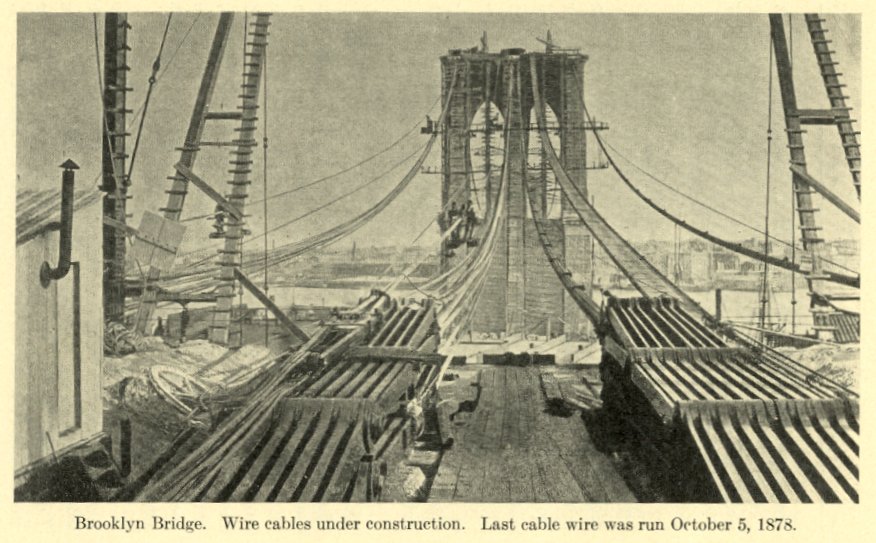
project to date. His father, John August Roebling, recently won a bid to construct what would become the largest bridge ever made: A structure spanning the wide East River of the City of New
York, linking Manhattan and the Brooklyn borough.
"Some people's beauty lies not in the features, but in the varied expression that the countenance will assume under the various emotions. She is...a most entertaining talker, which is a mighty good thing you know, I myself being so stupid."-Washington
Roebling, on his wife Emily, in a letter to his sister, 1865.
Unfortunately for the Roebling men, the construction of the Great East River Bridge would be costly. John Roebling was a celebrated designer and builder of wire rope suspension bridges. He was put in charge of construction in 1869 and tapped his eldest son Washington to be Chief Engineer. Washington had proven his
worth two years prior, when he assisted his father in the construction of a bridge that would bear the family name.
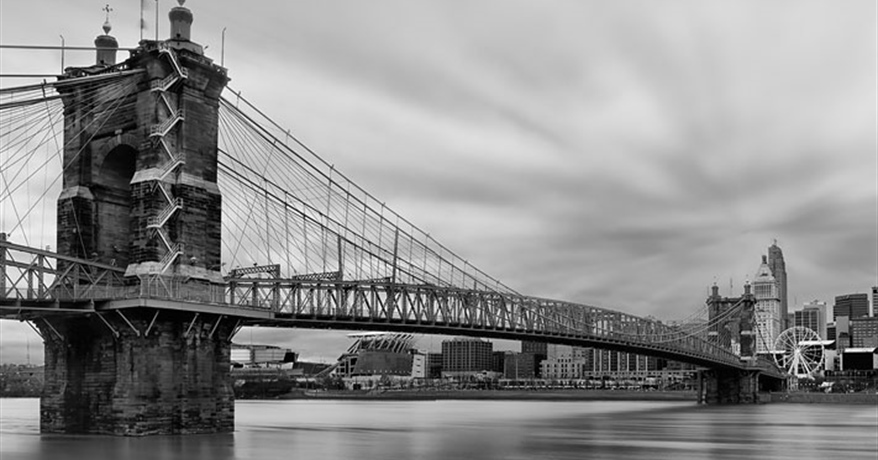
The John A. Roebling Suspension Bridge, which spans the Ohio River, opened January 1, 1867, and was, at the time, the longest suspension bridge in the world, measuring 1,075 feet. Tragically, Roebling patriarch John was involved in a freak accident while surveying the project site
in Manhattan, when his foot was crushed by a ferry. Though his toes were amputated to prevent complications, tetanus set in and took his life three weeks later, at the age of 63. Now, the
junior Roebling, Washington, would take charge. Emily proved invaluable, helping Washington navigate grief alongside the mounting pressures of the bridge. Washington threw himself into his work. Then, in 1872, when Washington dove deep into the depths of the East River to inspect the caissons, he contracted decompression sickness. 'The bends,' a result of toxic nitrogen bubbles forming in body tissues and blood, caused massive visual and auditory damage, leaving Washington partially paralyzed, blind, and mute. He was physically incapable of leading the East River bridge project.
Fortunately, Emily was perfectly capable of keeping up with the project demands, and also proved to have keen insight and vision of the bridge’s engineering details. As a supportive wife, she had encouraged her husband's command of their honeymoon, and Emily had spent most of their precious time together taking meticulous notes by her husband’s side. She implicitly knew what was needed to finish
the project. More impressive still, Emily dedicated time to learn the technical issues: Researching the strength of building materials, reviewing stress analyses, studying cable construction, and more.
Every day, she toured the construction site, fielded questions from workers, and answered each one of them. She'd jot down instructions in her own penmanship, and then claimed the orders had been written by her husband. She replied to
Washington’s mail and stood in for him at social functions. She became so tethered to the project that many assumed she had been the brains of the operation from the start.
Eleven years after Emily assumed control of construction, in 1883, the Brooklyn Bridge was completed. Emily twice traversed the bridge. On opening day, May 24, she was the first to cross, carrying a rooster; a symbol of victory.
The second crossing was accompanied by President Chester A. Arthur. Rising to celebrity status, Emily was invited to the coronation of Tsar Nicholas II and was granted an audience
to Queen Victoria in 1896. By the 1930s, however, most people had not only forgotten who had constructed the Brooklyn Bridge, but were unaware of Emily’s vital contributions.
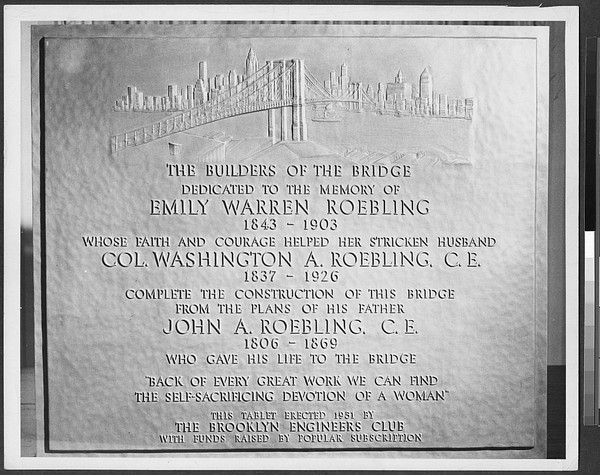
It wasn’t until the 1950s that Emily was formally recognized with the dedication of a plaque to her memory. Located on
the 6,000 ft. bridge; it memorializes a prideful project for the USA and a profound feminine feat of engineering. Visitors can visit by traversing on foot; Or, if one happens to be afraid of heights, one may want to abstain from crossing said bridge, and, instead, sojourn to Emily Warren Roebling Plaza: A two-acre public space situated
between Main and John Streets, unveiled in 2021. The park provides some of the best views of the iconic Brooklyn Bridge and links its construction to the unsung heroine who engineered it.
Want to schedule an in-person Immersive Living History Experience? Not sure which production to choose? You can enjoy many performances on your own time and select your favorites!
*$5 applies to ON DEMAND household viewing (no large groups/broadcasts).
Step into the opulent world of intrigue, elegance, and deception. Join distinguished guests and charming characters as you dine on a five-course British feast surrounded by mystery and the grandeur of a bygone age in A Downton Experience™.
We collaborate with middle school students, teaching the art of living history, whilst producing and directing a rendition of How Long Must We Wait?™ (commissioned by MWHC, 2019). Read about our 2025 residency (p.4) and enjoy the student performance in 2026.
You have received this message because you have signed up for our mailings; corresponded with History At Play™, LLC; purchased a ticket or attended a program; or registered for a conference at which History At Play™, LLC was
a vendor/exhibitor.